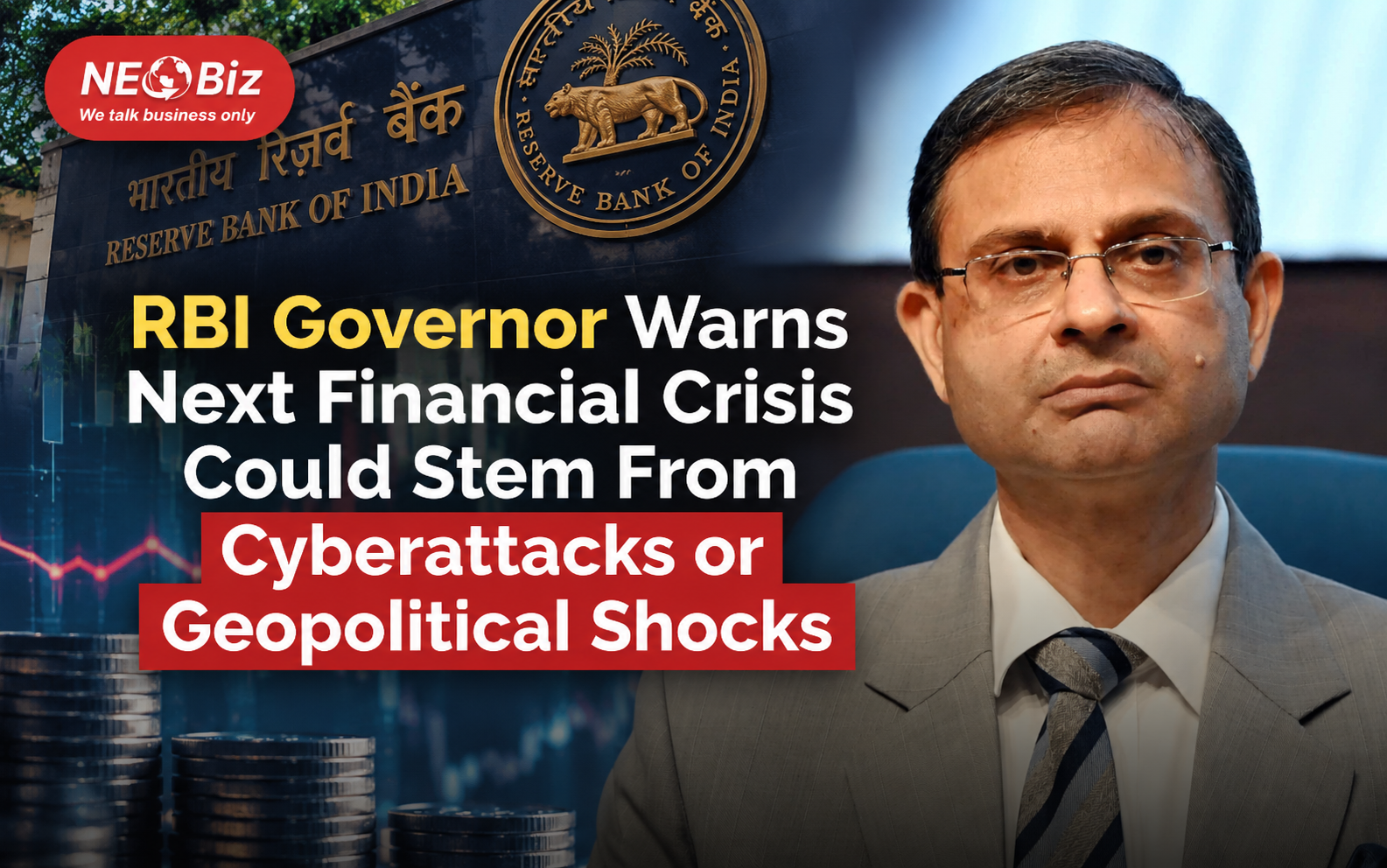
Reserve Bank of India Governor Sanjay Malhotra has warned that the next major disruption to the global financial system may not necessarily originate from traditional banking or financial-sector weaknesses. Instead, risks such as large-scale cyberattacks, geopolitical conflicts and major technology failures could potentially trigger financial instability across interconnected markets.
Speaking about emerging risks to financial stability, Malhotra highlighted how the increasing dependence of banks and financial institutions on digital infrastructure has changed the nature of systemic threats. As financial services become increasingly technology-driven, disruptions to critical digital systems could spread quickly across institutions, markets and economies.
Cybersecurity has consequently become an important component of financial stability. Banks, non-banking financial companies, payment networks and other financial institutions rely heavily on interconnected digital platforms to process transactions, manage customer information and operate essential services. A significant cyber incident affecting one major institution or infrastructure provider could therefore have consequences beyond the organisation directly targeted.
The growing integration between financial institutions and technology companies is another factor contributing to this risk. Banks increasingly depend on cloud infrastructure, digital payment systems, software platforms and external technology providers. While these systems have improved efficiency and accessibility, they have also created additional points of vulnerability.
A major cyberattack could potentially interrupt payment systems, compromise sensitive information or affect the ability of financial institutions to provide essential services. The economic impact could become more severe if uncertainty spreads among businesses, consumers and investors.
Geopolitical developments present another significant source of financial risk. Conflicts between major economies, disruptions to global trade routes, sanctions and sudden changes in international economic relationships can affect commodity prices, currencies, capital flows and financial markets.
For India, such external shocks could have implications across several sectors. Changes in global energy prices, supply-chain disruptions and volatility in international financial markets can influence businesses, inflation and investment conditions. Financial institutions therefore need to prepare not only for domestic economic risks but also for developments originating outside the country.
The warning comes at a time when the global financial system is becoming increasingly interconnected. Banks and financial markets in different countries are linked through international investments, payment systems, trade and technology infrastructure. This interconnectedness can help capital and services move efficiently, but it can also allow disruptions to spread rapidly.
Strengthening resilience will therefore require financial institutions to invest in cybersecurity, technology infrastructure and risk-management systems. Regular testing of digital systems, stronger safeguards for critical data and effective contingency plans can help institutions respond to unexpected disruptions.
The role of information sharing is also becoming increasingly important. Financial institutions, regulators and technology providers need mechanisms to identify emerging threats and respond quickly when vulnerabilities are detected. Cooperation between different parts of the financial ecosystem can reduce the possibility of an isolated incident developing into a wider systemic problem.
The Reserve Bank of India has increasingly focused on technology-related risks as digital payments and financial services continue to expand. India’s rapidly growing digital financial ecosystem has created significant economic benefits, but it also means that maintaining the reliability and security of digital infrastructure is essential for overall financial stability.
For businesses, the warning reinforces the importance of treating cybersecurity as a core operational and financial concern rather than simply an IT issue. Companies that depend heavily on digital payments, cloud platforms, online transactions and connected systems could face significant operational losses if critical infrastructure is disrupted.
Smaller businesses can also be affected by wider financial shocks even when they are not directly targeted by a cyberattack or geopolitical event. Payment disruptions, supply-chain interruptions, currency volatility and reduced consumer confidence can all have an impact on business activity.
The changing nature of financial risks means that preparedness will increasingly depend on the ability of institutions to anticipate disruptions rather than respond only after they occur. Building stronger digital infrastructure, diversifying critical systems and maintaining effective emergency-response mechanisms could become increasingly important for both financial institutions and businesses.
Malhotra’s warning highlights a broader shift in the understanding of financial stability. Future crises could emerge from a combination of technology, geopolitics and financial interconnectedness, making cooperation between regulators, banks, businesses and technology providers increasingly important.
As India continues to expand its digital economy and strengthen its financial infrastructure, managing these emerging risks will remain an important part of maintaining confidence in the financial system and protecting economic activity from unexpected global shocks.