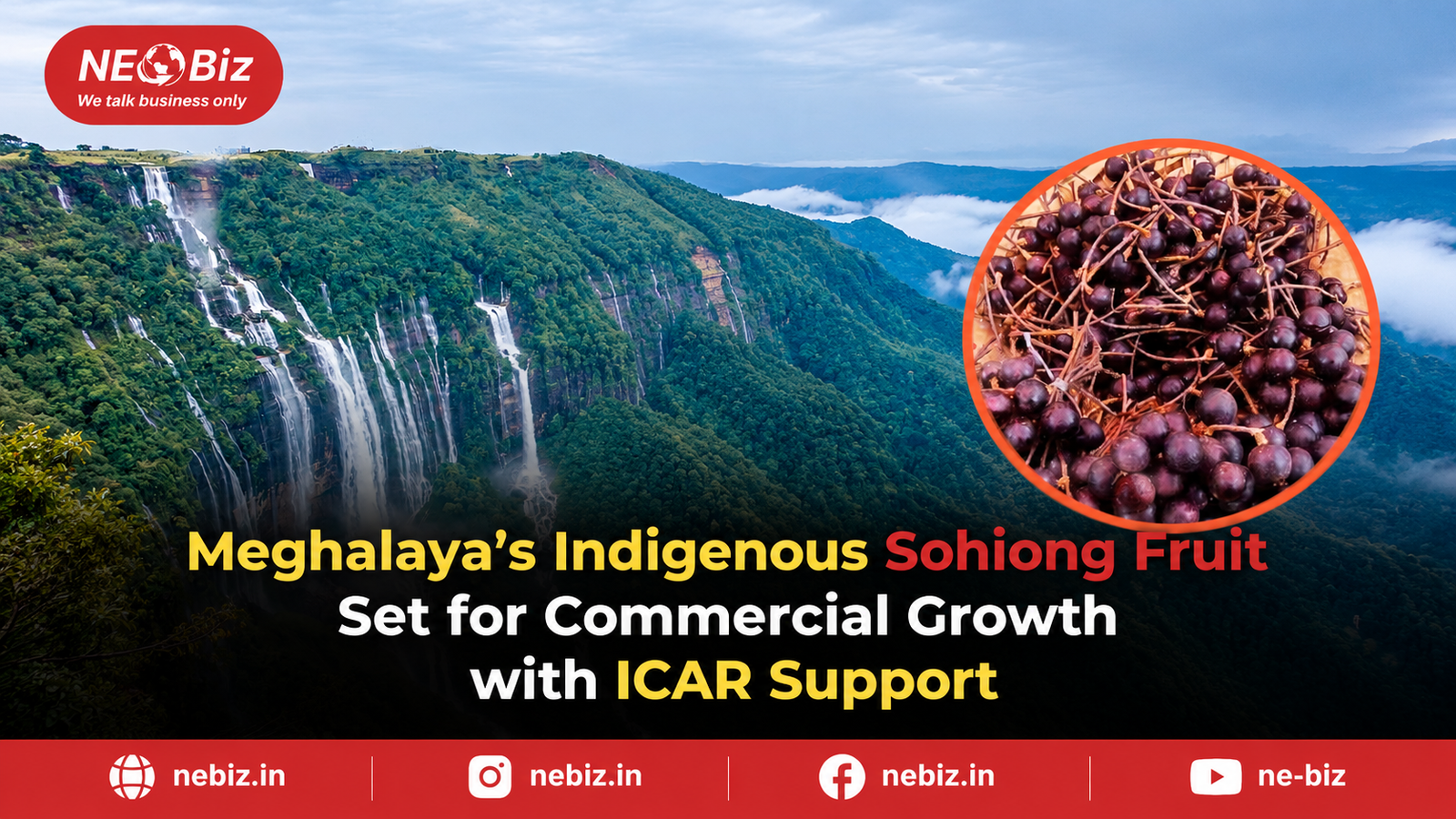
Meghalaya’s indigenous Sohiong fruit is gaining attention as a potential commercial crop, with interventions by the Indian Council of Agricultural Research (ICAR) aimed at strengthening its cultivation and creating new opportunities for farmers, food processors and entrepreneurs. The initiative highlights the potential of the state’s indigenous agricultural resources to contribute to rural livelihoods, value-added production and the growth of the regional agribusiness sector.
Sohiong, a locally valued fruit known for its deep purple to almost black appearance, is an important part of Meghalaya’s agricultural and food heritage. However, its commercial potential remains an area for further development. With institutional support and improved agricultural practices, the fruit could gain wider recognition beyond local markets and create opportunities across the agricultural value chain.
The efforts to promote Sohiong as a commercial crop reflect a broader focus on identifying region-specific agricultural products that can generate economic value. Northeast India is home to a diverse range of indigenous fruits, spices and other agricultural resources, many of which have potential for wider commercial use. Developing Sohiong could help farmers explore opportunities beyond conventional agricultural activities. Improved cultivation practices, scientific guidance, better access to planting material and post-harvest support can play an important role in making production more consistent and commercially viable.
Institutional interventions can also help bridge the gap between traditional agricultural knowledge and modern farming methods. By supporting the development of indigenous crops, research organisations can contribute to improving productivity, strengthening crop management and identifying suitable pathways for commercial expansion.
One of the major opportunities associated with the commercial development of Sohiong lies in food processing and value addition. Beyond fresh-fruit sales, the fruit could potentially be used in products such as jams, juices, preserves, fruit-based beverages and other processed foods, subject to product development and market validation. Value addition could enable farmers and local enterprises to explore different market segments while reducing dependence on seasonal sales of fresh produce.
Small-scale food-processing units, local entrepreneurs, farmer producer organisations and women-led enterprises could potentially participate in activities ranging from collection and grading to processing, packaging and distribution. Developing these products would require appropriate processing technology, quality control, packaging standards and reliable supply chains. Establishing these systems could help improve the marketability of Sohiong and create opportunities for businesses operating in the food and beverage sector.
For an indigenous crop to become commercially successful, production support must be accompanied by access to reliable markets. Farmers need suitable channels to connect with buyers, processors, retailers and other businesses that can absorb their produce at viable prices. Organised cultivation and aggregation could help address challenges related to fragmented production and inconsistent supply. Farmer groups and producer organisations may also be able to improve bargaining power, coordinate harvesting and facilitate access to larger markets.
Better post-harvest management will be another important consideration. Since fresh fruits can be vulnerable to spoilage, suitable storage, transportation and handling systems are essential to maintaining quality and reducing losses. These measures could help farmers and businesses manage the transition from local sales to wider commercial distribution.
The development of Sohiong also reflects the wider economic possibilities associated with Meghalaya’s indigenous agricultural resources. Promoting locally available crops can create opportunities to build businesses around regional products while supporting traditional knowledge and agricultural diversity. Entrepreneurs could explore branding, packaging, direct-to-consumer sales and digital marketing to introduce Sohiong-based products to customers beyond the state. Retail partnerships, online marketplaces and collaborations with food businesses could offer additional routes to market, provided production volumes and quality standards meet commercial requirements.
Such opportunities could also support rural entrepreneurship by encouraging more economic activity within farming communities. However, the benefits will depend on the availability of technical support, investment, market demand and sustainable business models that provide fair returns to producers.
Transforming Sohiong into a commercially viable crop will require coordination among researchers, farmers, government institutions, producer organisations and private businesses. Scientific cultivation practices and improved post-harvest systems will need to be supported by processing facilities, market linkages and consumer awareness. Research and development can help identify suitable production practices and product applications, while market assessments can establish consumer demand, pricing potential and opportunities for expansion.
The initiative also draws attention to the importance of diversifying agriculture in Northeast India. Developing crops suited to local conditions can help broaden income opportunities and strengthen the region’s agricultural economy.
ICAR’s interventions to promote Sohiong reflect the growing importance of scientific support in unlocking the commercial potential of indigenous crops. With suitable cultivation practices, value addition and stronger market connections, the fruit could offer opportunities for farmers and businesses across Meghalaya. The long-term success of this effort will depend on translating agricultural potential into commercially sustainable production and market demand.
For Meghalaya, the development of indigenous crops such as Sohiong presents an opportunity to connect agricultural heritage with modern commercial practices, creating pathways for locally rooted products to reach wider markets while supporting rural livelihoods and the broader growth of Northeast India’s agribusiness sector.