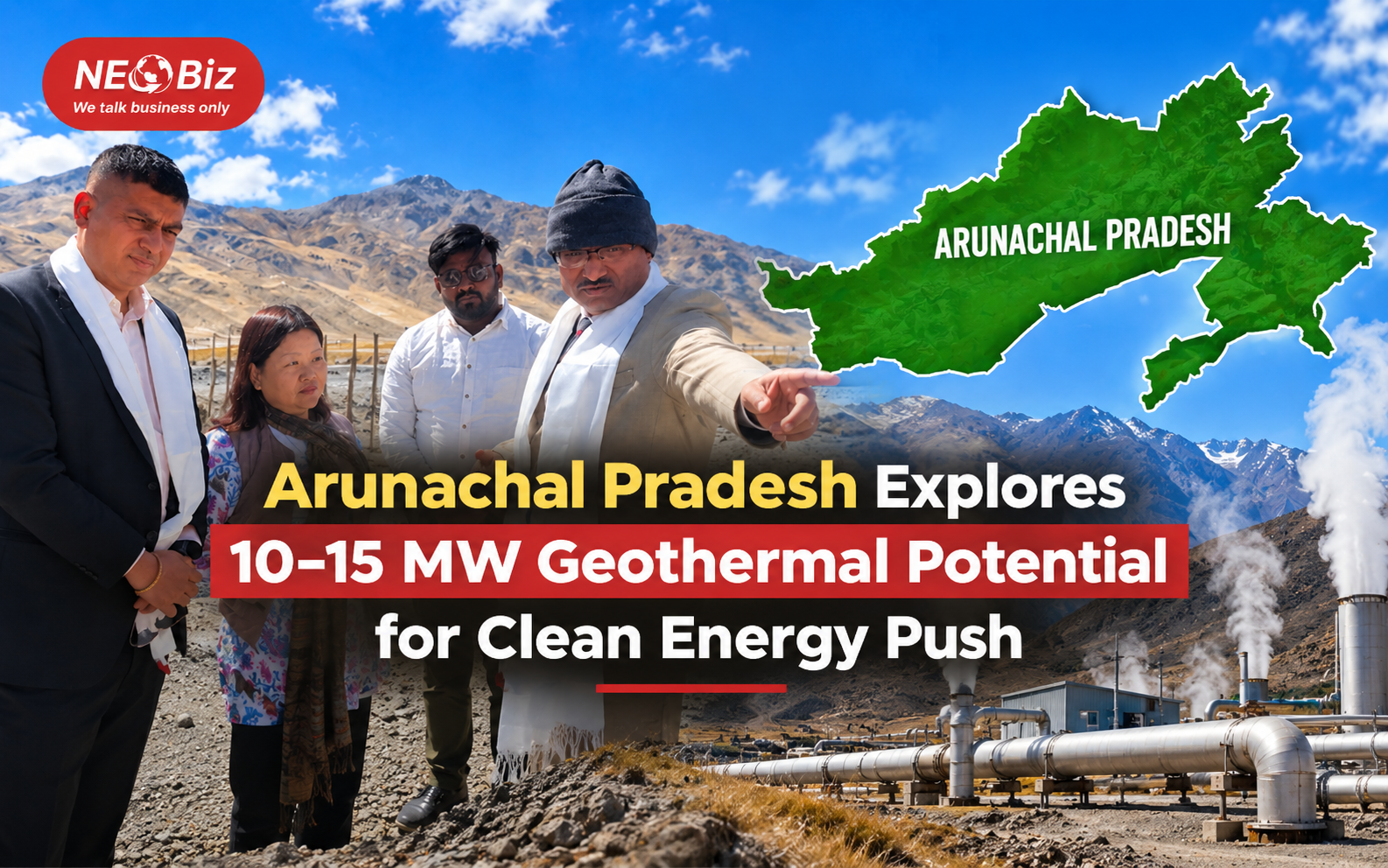
Arunachal Pradesh is exploring geothermal energy as a potential source of clean and reliable power for some of its remote and strategically important regions. The initiative is part of efforts to identify alternative energy resources that can improve electricity access in difficult terrain while reducing dependence on conventional sources of power.
The state’s geothermal potential has attracted attention because of the presence of naturally occurring underground heat in parts of the Himalayan region. Preliminary assessments have indicated the possibility of generating around 10–15 MW of geothermal power from the Mago-Thingbu area of Tawang district, although further exploration and technical studies will be required to establish the viability and scale of the resource.
Geothermal energy uses heat stored beneath the earth’s surface to generate electricity or provide direct heating. Unlike solar and wind power, geothermal generation is not dependent on sunlight or daily weather conditions, allowing it to potentially provide a more consistent source of energy once an appropriate resource has been identified and developed.
For Arunachal Pradesh, the opportunity is particularly significant because of the state’s challenging geography. Large mountainous areas, scattered settlements and difficult road connectivity can make the development and maintenance of conventional power infrastructure expensive and technically demanding. A locally available energy source could help address some of these challenges if geothermal projects are found to be commercially and technically feasible.
Exploration activities involving Oil India Limited and other agencies are expected to play a role in understanding the region’s geothermal resources. Detailed geological assessments, temperature measurements, drilling and resource evaluation will be necessary before any large-scale commercial generation can be considered.
The development of geothermal power could also create opportunities beyond electricity generation. If the resource proves viable, it could encourage investment in specialised equipment, drilling services, engineering, construction, transmission infrastructure and maintenance. Local businesses could potentially participate in supporting these activities as the sector develops.
The clean-energy potential is another important aspect of the initiative. Geothermal power generally produces significantly lower emissions than fossil-fuel-based electricity generation, making it relevant to India’s broader efforts to expand renewable and low-carbon energy sources.
Remote border areas could particularly benefit from greater energy independence. Reliable local power can support essential services such as healthcare, communications, water supply and public infrastructure, while also creating better conditions for economic activity in areas where access to electricity remains a major development factor.
Improved energy availability could also support tourism and small businesses in remote parts of Arunachal Pradesh. The state has considerable potential for tourism, particularly in its mountain and border regions, but infrastructure limitations can restrict commercial development. A more dependable power supply could help hotels, homestays, food businesses, telecommunications services and other local enterprises operate more efficiently.
However, developing geothermal resources in high-altitude and environmentally sensitive areas will require careful planning. The economic feasibility of drilling and infrastructure development, environmental considerations, accessibility and the actual capacity of the geothermal resource will all need to be evaluated before commercial projects can move forward.
The exploration therefore represents an early step rather than an immediate large-scale power-generation programme. More scientific studies and field-level assessments will determine whether the identified geothermal resources can support commercially viable electricity projects.
If the potential is confirmed, geothermal energy could eventually become another component of Arunachal Pradesh’s renewable energy portfolio alongside hydropower, solar and other emerging clean-energy sources. It could also provide an opportunity to develop specialised renewable-energy infrastructure in the Northeast.
For Arunachal Pradesh, the initiative highlights the growing importance of exploring locally available energy resources to address the challenges of geography, infrastructure and energy access. Successful development of geothermal power could combine environmental benefits with new investment opportunities while strengthening electricity availability in some of the state’s most remote regions.