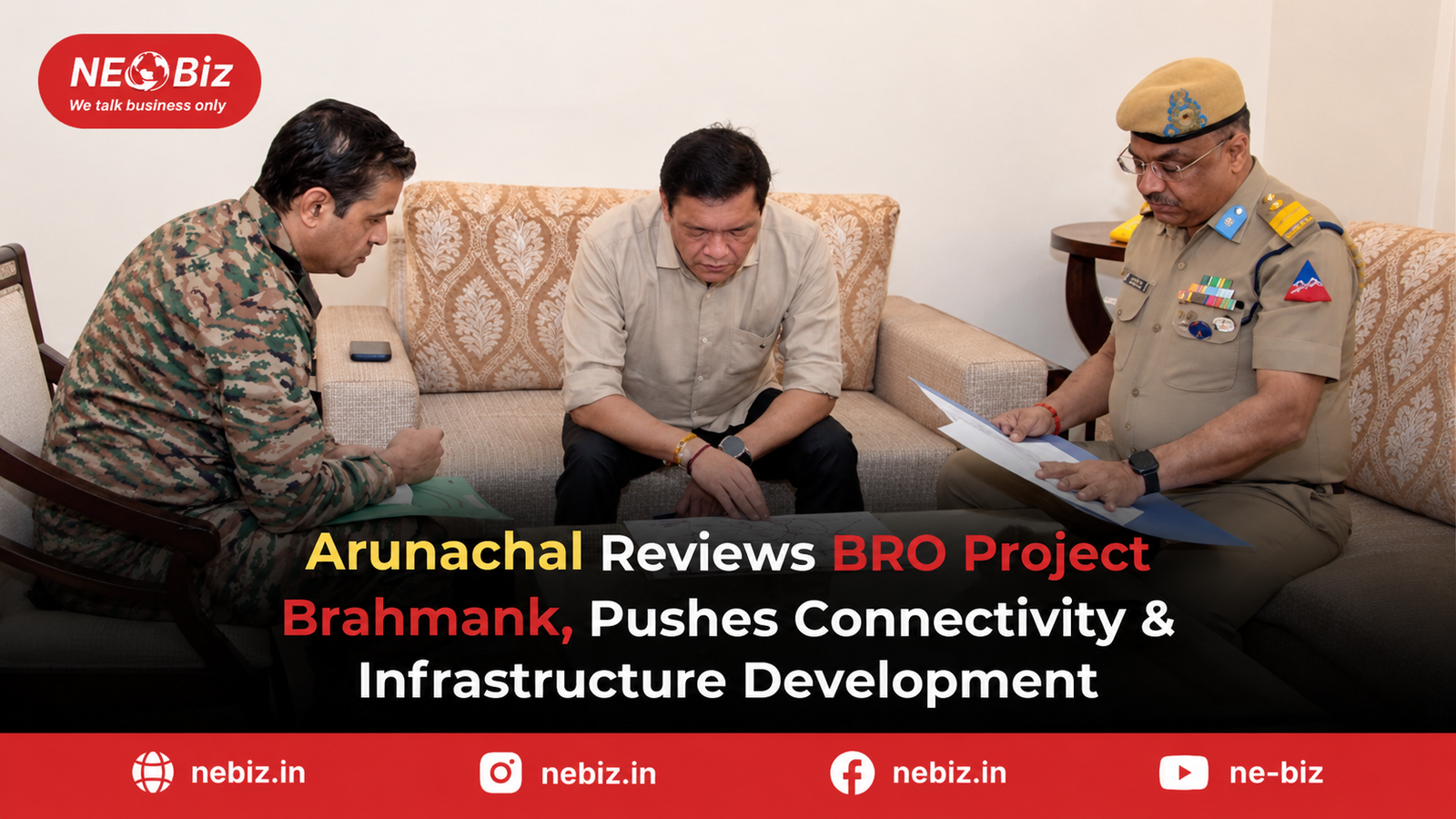
Arunachal Pradesh is stepping up its focus on infrastructure and connectivity with a review of ongoing works under the Border Roads Organisation’s (BRO) Project Brahmank. The review, led by the state’s leadership, examined the progress of key infrastructure works and highlighted the importance of improving road connectivity across the state, particularly in remote and strategically significant areas.
Project Brahmank forms an important part of the BRO’s infrastructure development efforts in Arunachal Pradesh, a state where challenging terrain, mountainous landscapes and difficult weather conditions often make road construction and maintenance complex. Reliable road networks are essential not only for strategic mobility but also for connecting communities, improving access to essential services and creating stronger economic links between remote areas and major centres.
The emphasis on connectivity comes at a time when infrastructure development is increasingly being viewed as a key driver of economic activity in the Northeast. Better roads can make it easier for businesses to transport raw materials and finished products, reduce logistical constraints and provide producers in remote areas with improved access to larger markets. Improved connectivity can also support the movement of agricultural and locally produced goods, helping small businesses and entrepreneurs expand beyond their immediate markets.
For Arunachal Pradesh, the development of road infrastructure has significance beyond transportation. Many parts of the state have considerable tourism potential, but accessibility remains an important factor in determining how quickly tourism-related businesses can grow. Improved roads can make destinations more accessible to visitors, while creating opportunities for hotels, homestays, restaurants, transport operators, local guides, handicraft sellers and other small businesses operating along emerging tourism corridors.
Stronger connectivity can also contribute to the development of local supply chains. Remote communities often face higher transportation costs and longer delivery times because of limited road access. Better infrastructure can help reduce these barriers, allowing businesses to source supplies more efficiently and reach customers more reliably. Over time, this can encourage greater private-sector participation and create opportunities for new commercial activity in areas that have traditionally remained disconnected from larger economic centres.
The infrastructure push is also important from a regional development perspective. Arunachal Pradesh shares international borders and occupies a strategically significant position in India’s Northeast. Roads built and maintained in these areas can serve multiple purposes, supporting both strategic requirements and civilian economic activity. The development of all-weather connectivity can strengthen links between border areas and the rest of the state while improving the movement of personnel, goods and essential supplies.
The review of Project Brahmank therefore highlights the broader role of infrastructure in shaping Arunachal Pradesh’s economic future. While the immediate objective is to ensure that ongoing road and connectivity works progress effectively, the long-term impact could extend to trade, tourism, logistics, employment and investment across the state.
As connectivity improves, better integration between Arunachal Pradesh’s remote districts and its urban and commercial centres could create a more favourable environment for local enterprises. Improved infrastructure can also support government initiatives aimed at promoting entrepreneurship, tourism and livelihood opportunities, particularly in areas where economic activity has historically been constrained by geographical isolation.
For the wider Northeast, developments in Arunachal Pradesh are significant because improved connectivity within one of the region’s largest and most geographically challenging states can contribute to greater regional integration. Stronger transport links can help connect local producers with markets in Assam and other neighbouring states while improving the movement of goods across the region.
The continued progress of Project Brahmank will therefore be closely linked to both infrastructure development and the broader economic transformation of Arunachal Pradesh. With sustained investment and timely execution, improved connectivity has the potential to strengthen local commerce, support tourism and logistics, improve access to markets and contribute to more balanced socio-economic development across the state.