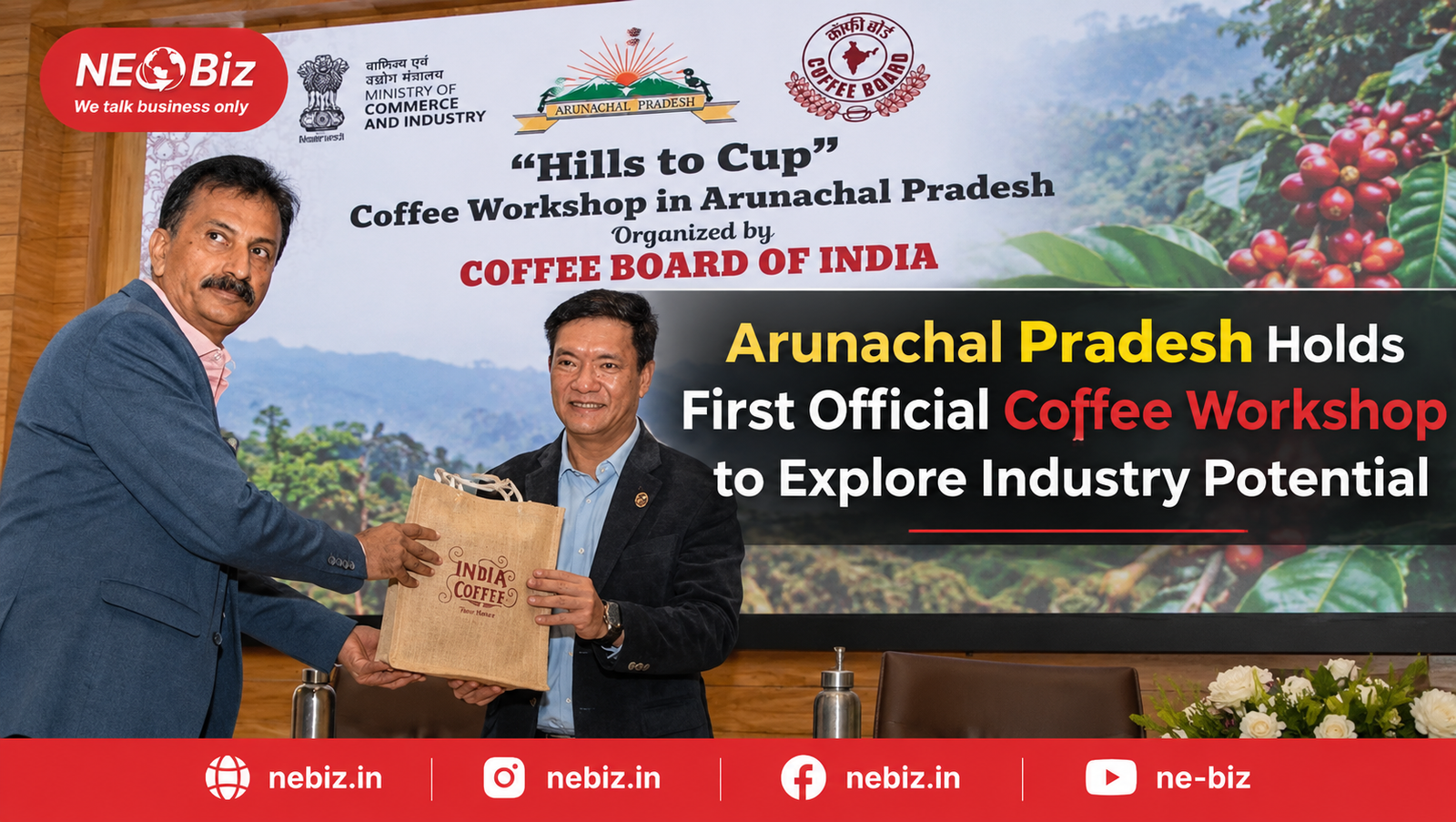
Arunachal Pradesh is taking steps to explore and strengthen its coffee industry with the organisation of its first-ever official coffee workshop, titled “Hills to Cup”. The initiative highlights the state’s growing interest in developing coffee cultivation as a potential avenue for agricultural diversification, rural entrepreneurship and economic growth. With its favourable climatic conditions, hilly terrain and rich natural environment, Arunachal Pradesh has opportunities to expand coffee production and explore new markets for locally grown produce.
The workshop was organised by the Coffee Board of India in collaboration with the Department of Agriculture, Government of Arunachal Pradesh. The initiative brings attention to the importance of developing the coffee sector through institutional support, knowledge sharing and closer coordination between agricultural stakeholders. By creating a platform for discussion and collaboration, the workshop aims to explore how the state can make better use of its agricultural resources while building a more organised coffee value chain.
The development of the coffee industry could create opportunities for farmers, local entrepreneurs, processors, traders and other businesses connected to the agricultural sector. Beyond cultivation, the coffee value chain includes harvesting, processing, grading, packaging, branding, transportation and distribution. Strengthening these activities within the state could help improve the commercial value of locally produced coffee and create additional opportunities for rural communities.
For farmers, the expansion of coffee cultivation could offer an alternative source of income and support the diversification of agricultural activities. However, the long-term growth of the sector will depend on access to quality planting materials, technical guidance, suitable cultivation practices, processing facilities and reliable market connections. Training and institutional assistance will also be important in helping growers meet quality standards and respond to changing consumer preferences.
The initiative also presents opportunities for the development of local coffee brands. As consumer interest in speciality coffee and region-specific agricultural products grows, Arunachal Pradesh could explore ways to establish a distinct identity for its coffee. Better packaging, quality certification, digital marketing and partnerships with retailers, hospitality businesses and distributors could help local producers reach consumers beyond the state. Connecting coffee production with tourism and local experiences may also create additional avenues for promoting the region’s agricultural products.
From a broader economic perspective, developing the coffee sector could contribute to employment generation, small-business development and stronger rural supply chains. Greater participation by private enterprises, producer groups and industry institutions could help attract investment in processing, storage, logistics and marketing infrastructure. Such developments would be important in moving beyond raw agricultural production towards higher-value products and commercially sustainable businesses.
The “Hills to Cup” workshop reflects an effort to examine the potential of coffee as an emerging economic opportunity for Arunachal Pradesh. While the sector’s expansion will depend on sustained investment, farmer participation, product quality and market access, the initiative places coffee cultivation within a wider discussion on agricultural development and entrepreneurship in the Northeast. If supported by a coordinated approach involving farmers, government institutions and businesses, the industry could gradually become an additional contributor to the state’s rural economy.